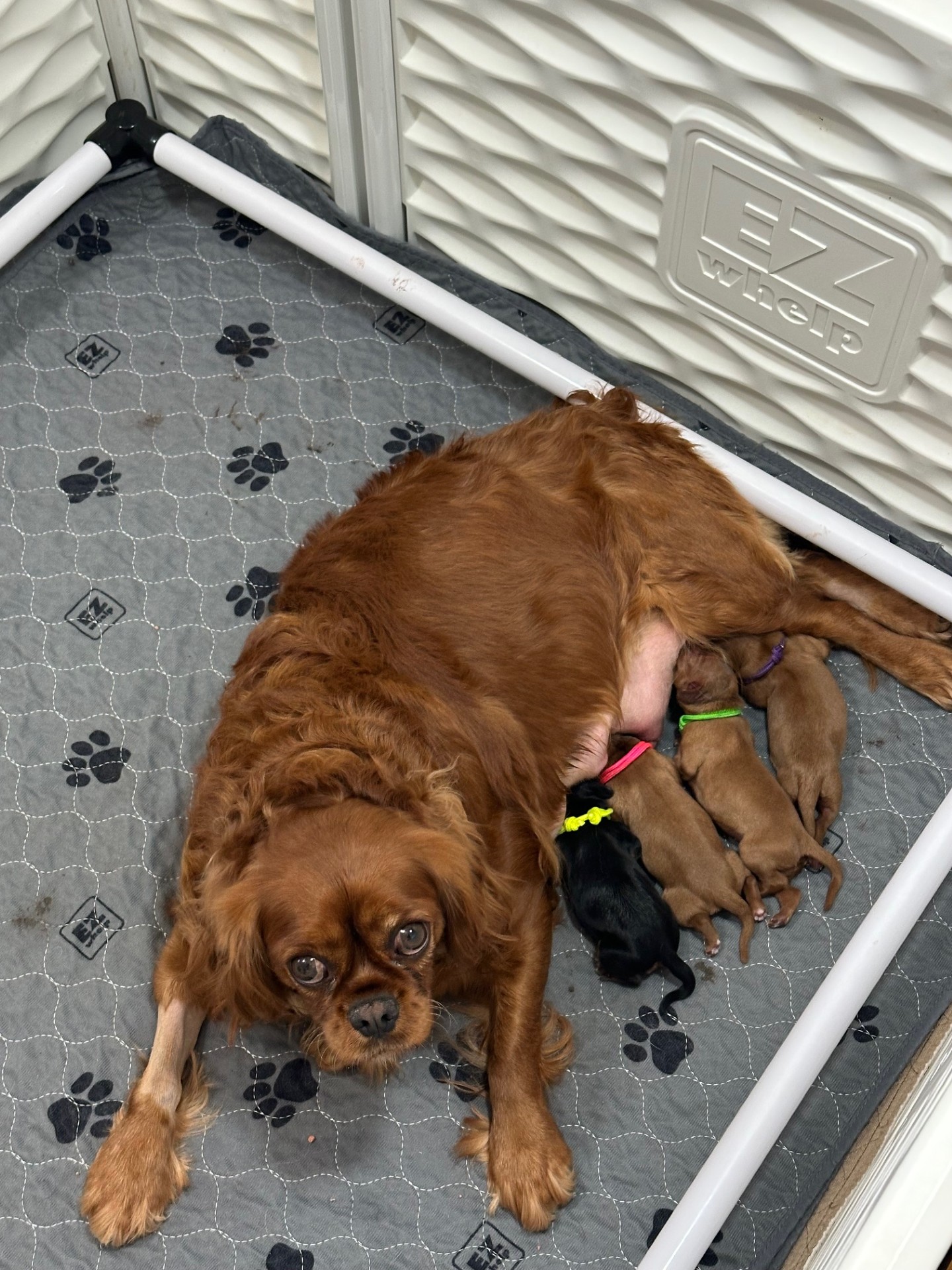
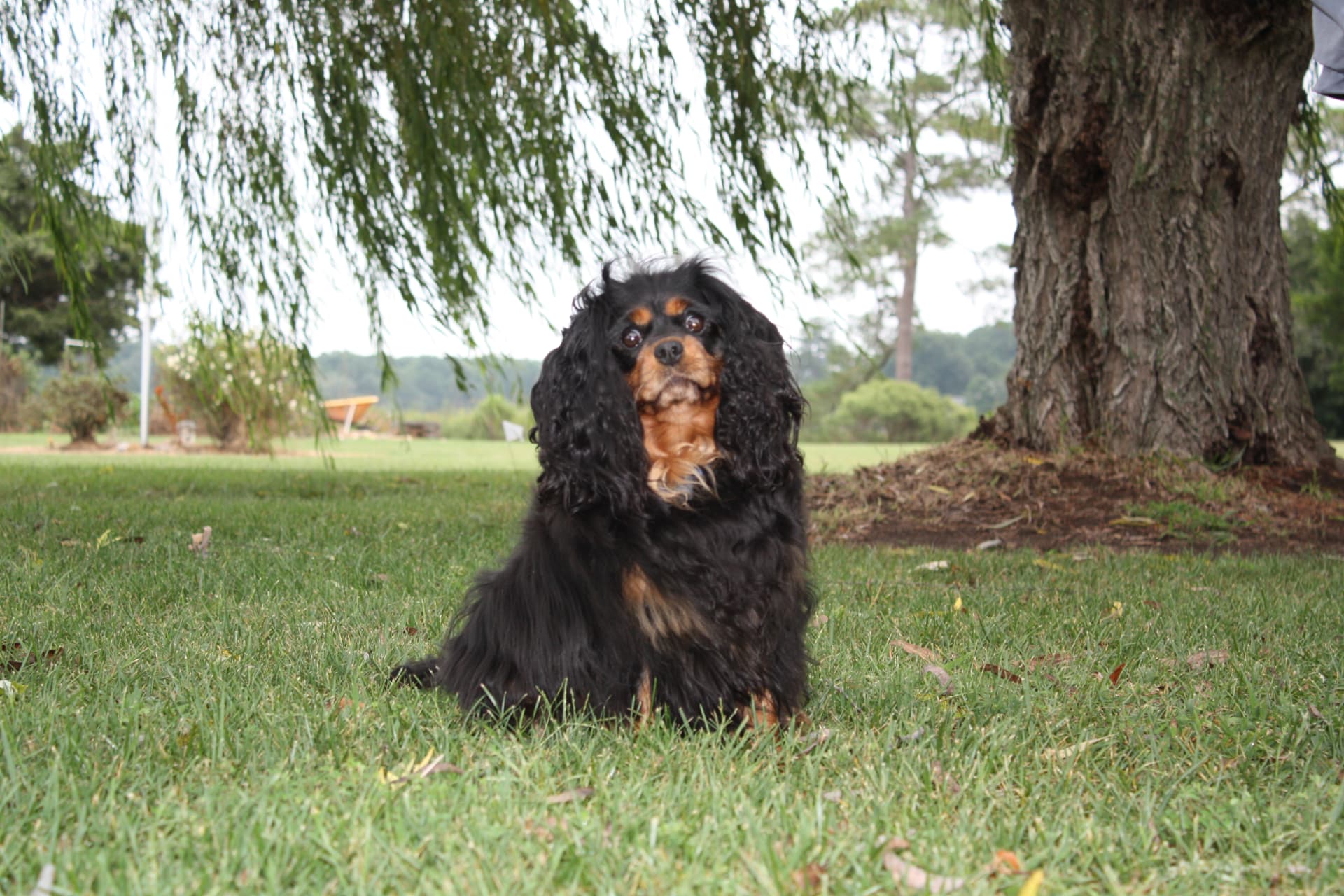
Congratulations on your new puppy — it is time to prepare for your new fur baby. Please note we are not dog trainers; these are suggestions based on how we work with our own dogs at home.
Crates: We use two. One lives in the living area for easy access — quiet time, or when you leave and return home, or when you are busy cooking and can't watch them. Always leave that crate door open when your puppy is out; you will find they go in to rest on their own because they learn it is a safe place. Our command is "kennel up," said every time you put them in, and after a few days start saying it first and offering a small treat when they walk in. The second crate is for bedtime only and stays in your bedroom. Take your puppy outside saying "outside go potty," come in and say "bedtime." In the morning, open the crate and go outside, then close the bedroom door so they learn the bedroom is for sleep. Whatever commands you choose, everyone in the family must use the same ones.
Toys: Puppies chew, and Cavaliers seem to love shoes. If they grab one, say "drop it," take it away, and replace it with a puppy toy. We recommend Benebones and Lumabones, replaced when they get too small. Rope and knot toys are not safe — ingested strings cause intestinal injury and death — so use them only under direct supervision. Squeaky toys are a favorite and are safe, but inspect them so your puppy can't reach the squeaker or stuffing; sew or toss torn toys. Buy quality tennis balls rather than cheap ones that tear apart. Remember your puppy will grow fast, so choose toys that stay safe at their adult size. Bitter Apple spray helps with chewing on molding and furniture — say NO and spray the area.
Collars, leashes, harnesses, clothes: Collars are lovely for looks, but do not leash from a collar — Cavaliers should walk on a harness and leash. Always remove the collar when your puppy is in the crate, as it can catch and hurt them. Sweaters and Velcro jackets are great in cold weather; in heat, skip the extra clothing and be careful of hot pavement, which burns the pads of their feet.
Gates: If certain areas are off limits, install gates before your puppy comes home. We prefer pressure/tension gates since they leave no holes in the wall.
Food: You will go home with a 4–6 pound bag of the food your puppy is already eating. If you prefer to switch, wait at least four weeks and transition slowly — switching too fast causes diarrhea. Look for taurine in the ingredients, which supports cardiac health, and avoid grain-free foods: research shows a correlation between grain-free diets and heart disease in Cavaliers. Wash food and water bowls regularly (a very dilute bleach rinse, then dish soap or the dishwasher), and use weighted bowls so they can't be tipped. Water should always be available except at bedtime. We use an automatic wide-mouth gravity waterer.
Treats: Treats are important for training — puppies thrive on praise and a small reward. Use their own kibble at first, then small training treats after a few weeks. Say the command, then praise in a higher-pitched voice, then treat. After six months we use frozen blueberries (two a day can help with eye staining), strawberries, watermelon, carrots, green beans, broccoli, and apples — always in small amounts and cut so nothing round can lodge in their throat. No salt or butter on popcorn. Be cautious with peanut butter: some dogs are allergic, and xylitol is toxic. Pill pockets or cheese work well for medication.
Vaccinations: Your puppy receives vaccinations at 6 and 9 weeks, and possibly at 12 weeks depending on timing and weight. Bordetella is not given while they are with us — discuss it with your veterinarian. Vaccinations after 10 weeks are the puppy parent's responsibility. Plan follow-up appointments at 10–12 weeks, 16–18 weeks, and 12–16 months.
Pickup day: Puppies leave at 10 weeks of age. You will receive medical records the day of pickup and must have your puppy examined by a veterinarian within 5–7 business days, so schedule that appointment now. When you arrive, you will meet the parents of your puppy and likely the rest of our dogs, and we review all paperwork with you together with plenty of time for questions. Deliveries are made only by us. You go home with gifts: a 3–6 pound bag of puppy food, a puppy toy, and a puppy blanket carrying the scent of the parents and siblings to ease the transition.
Vitamins: Your puppy begins daily NuVet Plus at 8 weeks, and we highly recommend continuing it — it supports skin and coat, eyes, ears, bones, teeth, digestion, immune system, heart, and nervous system. Order at nuvet.com with referral code 953756 or call 800-474-7044, ideally before your puppy comes home. Dosing at this age is a quarter tablet daily, a half tablet at 6 months, and a whole tablet at 8–9 months. We also recommend NuVet puppy shampoo — your puppy is bathed with it on discharge day.
Training tips (not training, just what we use): SIT — gently guide their hind end down while saying "sit," then praise and treat; a finger snap works later. LAY — from a sit, gently guide them down saying "lay." DOWN/OFF — when they jump, say "down" firmly with an open palm pushed downward; they learn the hand signal. SHAKE/PAW — take their paw while saying the word, then treat. COME — takes the longest; outside, use their name plus "come," starting on a leash with lots of treats. STAY — on leash, stop, put them in a sit, and repeat "stay," reinforcing each time. DROP IT — repeat the words while gently taking the item, then praise and treat. LEAVE IT — once drop it is learned, teach them to walk away from the item entirely; leash walks are the best practice.
We hope some of this is helpful. Never hesitate to email, text, or call with questions. Milt and I thank you for choosing Enchanting Cavaliers — we wish you all the best with your new fur baby, and we love getting pictures. — Susan & Milt Williams